


Few things ruin a day on the water faster than turning the key and hearing nothing happen. While a boat that refuses to start can feel like a major problem, the cause is often something far simpler than most owners expect. From battery issues to fuel delivery problems, understanding where to look first can save time, prevent unnecessary repairs and help you get back underway sooner.
Whether you rely on a marine mechanic in Sydney for regular servicing or handle basic maintenance yourself, knowing how to troubleshoot common issues is a valuable skill. Superior Marine Services understands that a systematic approach is the safest and most effective way to identify the problem. This guide explains the key checks to perform, the warning signs to watch for and when it is best to stop troubleshooting and seek professional assistance.
Check the Battery, Connections and Safety Switches
Electrical issues are among the most common reasons a boat will not start. Before assuming a major mechanical failure, it is important to rule out simple problems with the battery, power cables or safety lockouts that prevent the engine from cranking or firing.
A quick, systematic check of the battery, wiring connections and safety switches can often identify the issue within minutes. In some cases, the engine may start again without tools or complex testing.
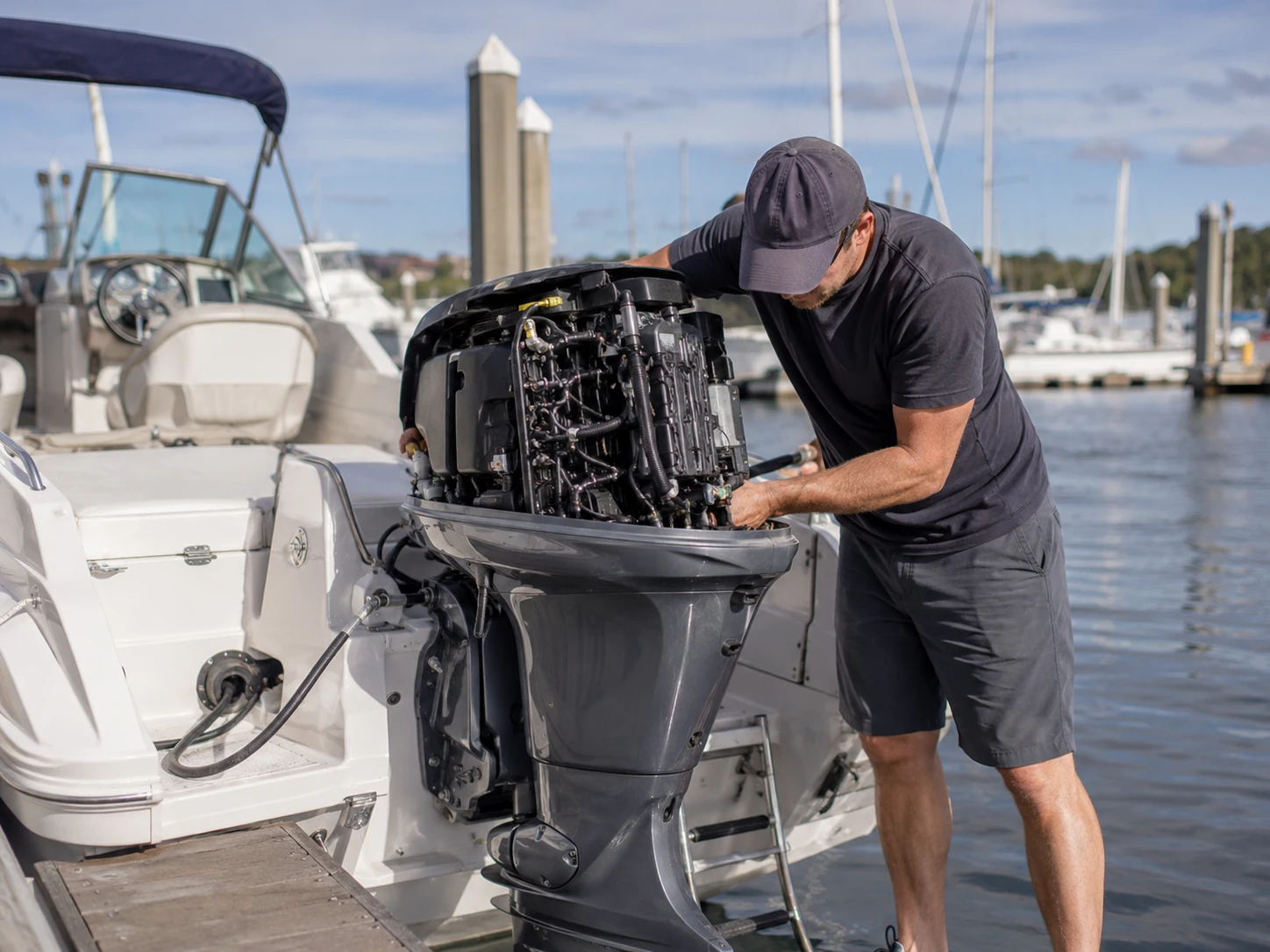
Assess Battery Charge and Condition
Begin with the battery, since low voltage or a weak battery will either produce a slow, laboured crank or only a click at the key. If a voltmeter is available, check the voltage across the battery posts with the engine off. A healthy, fully charged 12-volt marine battery should read around 12.6 volts. Around 12.2 volts indicates roughly half charge, while readings near or below 12 volts suggest the battery may not have enough power to start the engine.
If no voltmeter is available, check visually and physically. Look for a swollen, cracked or leaking case, as this can indicate a failed battery that must be replaced. Try the horn or navigation lights. Very dim lights or a weak horn usually signal low battery power.
If another charged battery or a suitable marine-safe jump pack is available, carefully attempt a jump start by following the engine manufacturer’s guidance. Take care to use the correct polarity and avoid creating sparks near fuel vapours or battery gases. If the engine starts easily on a known good power source, suspect a failing or discharged battery.
Inspect Cables, Terminals and Ground Connections
Even a strong battery cannot start the engine if power cannot flow through the cables. Inspect both positive and negative battery cables from the battery to their connection points. Terminals should be tight, clean and free of corrosion. White or green crust on terminals, or heavy rust on cable ends, increases resistance and can prevent enough current from reaching the starter.
Light surface corrosion can often be removed with a stiff brush or terminal cleaner after disconnecting the battery. Terminals should be reattached snugly so they do not move by hand.
Pay close attention to the negative cable where it grounds to the engine block or a bus bar. A loose or corroded ground is a frequent cause of intermittent no-start problems. Also check for damaged insulation, kinks or crushed sections of cable that may limit current flow and require replacement.
Verify Neutral Safety and Kill Switches
Modern boats include safety devices that block starting if they are not correctly set. If the engine will not crank and the battery system appears sound, confirm that the control is in neutral. The neutral safety switch inside the control box prevents the starter from engaging if the throttle or shift lever is in gear or not aligned precisely in neutral.
Move the control lever back to neutral and try starting again. Slight adjustments forward and backward in the neutral area may help if the switch is marginal.
Outboards and many inboards are also equipped with an emergency stop or kill switch, usually connected to a lanyard clip. If the lanyard has been pulled or the clip is not seated, the engine may fully crank but fail to start, or it may not crank at all, depending on the design.
Confirm the lanyard is attached correctly and the switch is not damaged. Some boats also have ignition or battery master switches that must be on for power to reach the starter circuit, so these should be checked and set to the proper position before further troubleshooting.
Check Whether Fuel Is Reaching the Engine
If the starter turns the engine but it will not fire, the next suspect is fuel delivery. Modern outboards and inboard engines depend on a clear path from the tank to the cylinders. Any break in that chain means the engine may crank endlessly without starting, or it may start and then stall.
Checking fuel flow does not always require advanced tools. Simple visual inspections and a few careful tests can quickly show whether fuel is reaching the engine or whether a blockage, air leak or component failure may be to blame.
Confirm Fuel Supply and Tank Settings
Begin at the source. Verify that there is enough fuel in the tank and that the fuel is fresh. Old petrol that has sat for months, especially with ethanol content, can lose volatility and separate, leading to hard-starting or no-start conditions.
Check the following in order:
- Make sure the fuel tank vent is open. A closed or clogged vent creates a vacuum in the tank, which prevents fuel from flowing to the engine.
- Inspect the fuel tank selector if there are multiple tanks. Confirm it is set to the correct tank and fully engaged in position.
- Look at the fuel level sender area and any visible hoses at the tank. Cracked or collapsed hoses, or obvious leaks, can allow air into the system and prevent fuel from reaching the engine properly.
If portable fuel tanks are used, ensure the quick-connect fittings at the tank are fully seated and not corroded.
Inspect Primer Bulb, Lines and Filters
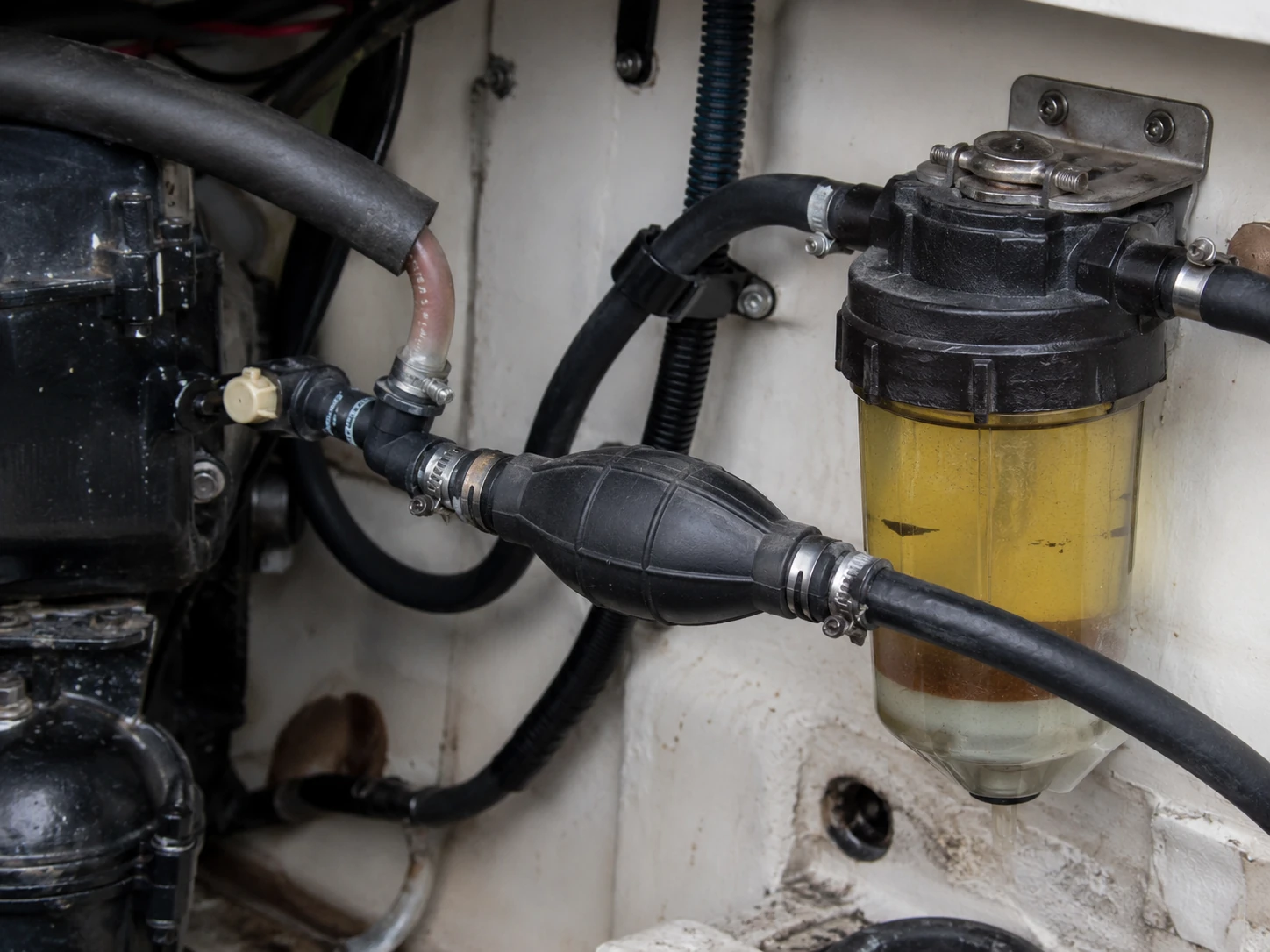
From the tank, follow the fuel line towards the engine. Squeeze the primer bulb several times. It should become firm within a few squeezes. If it never firms up or slowly collapses, there is usually a restriction or air leak on the tank side. If it is rock hard from the start, there may be a blockage.
While pumping the primer bulb:
- Look closely for fuel leaks at each connection.
- Watch for bubbles in any clear sections of the line.
- Ensure the arrow on the primer bulb points towards the engine.
Next, examine the fuel filter or water-separating filter if fitted. A filter bowl that is empty or only partially filled suggests fuel is not making it through from the tank. A bowl full of water or debris indicates contamination. In this case, the filter should be replaced and contaminated fuel should be drained or professionally dealt with before the engine is run again.
Verify Fuel Reaches the Engine Itself
At the engine cowling side, ensure the fuel line quick connector is fully locked in. A loose connector can allow just enough fuel through for the engine to start briefly, then stall under load.
If fuel starvation is still suspected, a basic check may be possible:
- Carefully remove the engine cowling.
- Watch the fuel line at the engine inlet and any clear filter or sight glass.
- On carburetted engines, gently crack the carburettor drain screw or bowl plug with the engine off and a suitable container ready.
Only perform this type of fuel check in a well-ventilated area, with the engine off, no ignition sources nearby and suitable protection against spills. If there is a strong smell of fuel, visible fuel in the bilge or any uncertainty about safety, stop immediately and seek professional assistance.
If no fuel appears at this point, yet all upstream checks look normal, the problem may lie with an internal fuel pump failure or a more complex issue that requires professional diagnosis and repair.
Pay Attention to What Happens When You Turn the Key
The first few seconds after turning the key reveal important clues about why a boat will not start. The sounds, or lack of sounds, from the engine and electrical system help narrow the problem to battery, starter, ignition or fuel issues before more detailed testing begins.
Listening and observing at this moment saves time and prevents unnecessary part swapping. The goal is to link specific symptoms with the most likely causes so the right checks can be made in the right order.
If There Is No Sound at All
Turning the key and hearing absolutely nothing points towards a power or connection problem rather than a fuel or internal engine fault. The engine is not even attempting to crank.
Begin by noting whether any electrical items work. If the key is turned and there are no lights at the helm, no gauges moving, no alarm beeps and no click from the starter solenoid, the battery or main battery switch is suspect. Confirm the battery switch is in the correct “on” position and that any safety lanyard or kill switch is properly attached.
If the helm electronics light up but the starter remains silent, the issue is likely in the start circuit. A single faint click often indicates the starter solenoid is receiving a signal but cannot pass enough current due to a weak battery, corroded terminals or a failing solenoid. Multiple rapid clicks usually mean low battery voltage or a poor connection.
If the Engine Cranks but Does Not Start
When the starter turns the engine over normally but the engine will not fire, the basic cranking system is working. The problem has shifted to fuel, ignition, compression or engine management.
Pay attention to how the cranking sounds. A healthy crank has a strong, consistent rhythm. If the engine spins unusually fast with little resistance, that can indicate a lack of compression from an internal issue. More commonly, the engine cranks at a normal speed but simply never catches, which may relate to fuel delivery or spark.
Note whether there is any attempt to start. Sputtering that dies quickly can suggest fuel is reaching the engine inconsistently, possibly because of a clogged filter, air in the fuel line or a closed fuel shutoff valve. A total absence of firing despite strong cranking often points to an ignition or engine management problem.
If the Crank Is Weak or Stops
A sluggish crank, where the starter labours slowly or stops after a few turns, almost always indicates a low battery or high resistance in the cables. The sound often resembles a tired moan rather than a brisk spin.
If turning the key dims the helm lights or causes electronics to shut off during cranking, the battery is likely discharged or failing. A warm or hot battery cable end after a short crank suggests corrosion or a loose connection is creating resistance.
Continued cranking risks overheating the starter and draining the battery further. Release the key and inspect the battery, cables and connections before trying again.
Know When to Stop Troubleshooting and Call a Marine Mechanic
Basic checks on batteries, fuel and controls are worth attempting on the water or at the dock. However, there is a point where continued trial and error can turn a simple no-start into an expensive repair or safety hazard.
Knowing when to stop and involve a qualified marine mechanic protects the engine, passengers and the vessel. Certain symptoms strongly indicate that professional diagnosis is needed rather than more DIY experimenting.
When Further Cranking Could Cause Damage
An engine that cranks but refuses to start after several short attempts may have a fuel delivery, ignition, compression or control-system problem. Prolonged cranking can overheat the starter, drain batteries and, in some cases, wash oil from cylinder walls.
Stop troubleshooting and call a mechanic if any of the following occur:
- The starter slows or clicks repeatedly despite charged batteries.
- There is a strong smell of fuel in the engine compartment or at the transom.
- The engine briefly fires, then immediately dies multiple times.
These signs point to issues that require proper testing equipment, such as fuel pressure gauges, timing lights and diagnostic scanners, rather than more key turns.
Signs of Electrical or Fuel System Risk
Electrical and fuel faults on boats can escalate quickly into dangerous situations. If anything appears unsafe, stop troubleshooting.
Professional help is advised immediately if:
- Battery cables, terminals or wiring feel hot, look melted or show signs of arcing.
- Fuses keep blowing or breakers keep tripping when trying to start.
- There are visible fuel leaks, wet fuel lines or fuel in the bilge.
- A strong burning smell appears, or light smoke is seen near wiring or the engine.
Do not keep cycling the key, tapping on components or bypassing switches in these situations. A marine mechanic can safely isolate the fault and repair or replace compromised components before the next outing.
When You Are Out of Knowledge or Tools
Modern outboards, sterndrives and inboards often rely on electronic control modules, sensors and computer diagnostics. Once basic checks such as kill switch position, neutral shift, battery voltage and visible fuel supply are confirmed, further guessing rarely helps.
Stop DIY efforts and schedule service when:
- Warning lights or alarms appear on a gauge or display with no clear explanation.
- Specialised tools are clearly required, such as diagnostic software or compression testers.
- The problem keeps returning after temporary fixes or adjustments.
Persistent or complex issues usually indicate an underlying fault in ignition timing, fuel mapping, sensor input or internal engine condition. A qualified marine mechanic can interpret fault codes, perform systematic diagnostics and confirm that the repair is complete and safe before the next trip.
A boat that will not start does not always point to a major mechanical failure. In many cases, the cause is something simple, such as a flat battery, loose connection, blocked fuel supply or activated safety switch.
By following a logical troubleshooting process and paying attention to what happens when the key is turned, boat owners can narrow down the likely cause and avoid unnecessary guesswork. Just as importantly, knowing when to stop and call a qualified marine mechanic can prevent further damage and help keep everyone on board safe.
With regular maintenance and support from professionals, unexpected starting problems can be reduced, helping you spend more time enjoying reliable performance on the water.
