


Understanding what is happening inside a boat engine can be difficult, especially when internal problems are not visible during a routine inspection. A compression test provides a simple way to assess engine health by measuring the pressure produced in each cylinder during cranking. The results can reveal potential issues with components such as piston rings, valves, cylinder walls and head gaskets.
For boat owners, knowing what the readings mean can help explain symptoms such as hard starting, rough running, reduced power and increased fuel consumption. A marine mechanic in Sydney can use compression results alongside other diagnostic checks to determine whether an engine is operating as it should.
Superior Marine Services can help identify potential internal engine problems and recommend the appropriate next steps based on the test results. Understanding compression readings gives boat owners useful insight when planning maintenance, repairs, an overhaul or possible engine replacement.
Why Cylinder Compression Matters for Engine Performance
Cylinder compression plays a key role in how a petrol marine engine produces power. Each cylinder needs to trap and compress the air-fuel mixture effectively so it can ignite and produce a strong power stroke. When compression is healthy and consistent, the engine is more likely to start easily, run smoothly and deliver the expected performance.
When compression is low or uneven, one or more cylinders may produce less power than the others. This can affect:
- Power: A weak cylinder can cause sluggish acceleration, difficulty getting the boat onto the plane and reduced top speed.
- Fuel efficiency: Poor compression can prevent the air-fuel mixture from burning efficiently, increasing fuel consumption and potentially causing misfires.
- Smooth running: A significant difference between cylinders can result in rough idling, hesitation and noticeable vibration.
- Internal engine health: Falling compression can provide an early indication of worn piston rings, damaged cylinder walls, leaking valves or head gasket problems.
A compression test therefore provides a useful snapshot of how effectively the cylinders are sealing during the compression stroke. The results can then be considered alongside the engine's symptoms, service history and manufacturer specifications to determine whether further investigation is needed.
What Is a Normal Compression Reading for a Boat Engine?
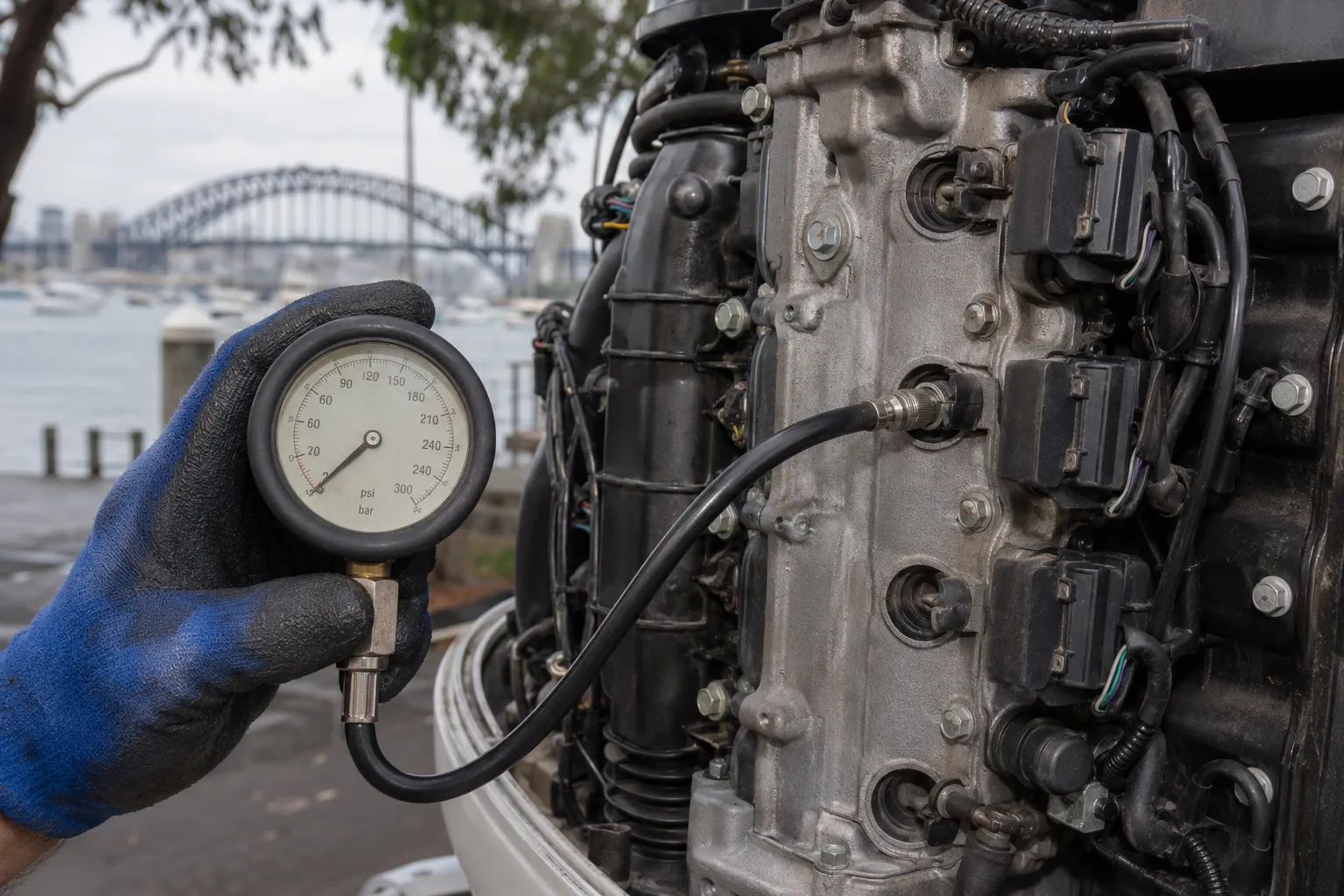
There is no universal compression reading that applies to every boat engine. Outboards, inboards and sterndrives have different engine designs, compression ratios and manufacturer specifications, so the service or workshop manual should always be the main reference.
Some healthy petrol marine engines may produce readings in the 120 to 200 psi range, but this is only a broad reference and should not be used as a pass-or-fail standard. A reading that is normal for one engine may be unsuitable for another.
What matters most is whether the readings are appropriate for the specific engine and reasonably consistent across its cylinders. For example, readings of 150, 152, 148 and 151 psi are more encouraging than 180, 178, 175 and 130 psi because the lower cylinder may indicate a sealing or internal mechanical issue.
When interpreting compression results, consider:
- Manufacturer specifications: These provide the most reliable acceptable range for the particular engine.
- Cylinder consistency: A weaker cylinder can be more important than the overall average.
- Testing conditions: Temperature, battery strength, cranking speed, throttle position and gauge accuracy can affect results.
- Engine history: Operating hours, previous overheating, maintenance and current symptoms provide important context.
A professional can compare the readings with the correct manufacturer specifications and assess them alongside other diagnostic findings. Good and even compression is a positive sign, but it does not rule out problems with the fuel, ignition, cooling, lubrication or drivetrain systems.
How Much Compression Difference Between Cylinders Is Acceptable?
Compression readings should be consistent across all cylinders, although the acceptable variation depends on the engine manufacturer's specifications. As a general diagnostic guideline, technicians often look for readings within about 10% of each other. A difference of around 10 to 15% or more may warrant further investigation when the engine also has symptoms such as hard starting, rough running or reduced power.
For example, if three cylinders produce around 150 psi but one records 130 psi, the lower reading is significant even if the engine still starts and runs. The cylinders should be assessed against each other and the manufacturer's specifications rather than judged using a generic pressure figure alone.
Why Consistency Matters
Even compression allows each cylinder to contribute a similar amount of power, helping the engine run smoothly and efficiently. A weaker cylinder can contribute to:
- Rough running or vibration
- Hesitation during acceleration
- Reduced power under load
- Difficult starting
- Increased fuel consumption
A small variation is not necessarily a concern on an older engine, but a noticeably lower cylinder should be investigated.
What Causes Large Variations?
A large difference between cylinders can result from worn piston rings, damaged cylinder walls, leaking or burnt valves, damaged pistons or a head gasket fault. However, testing conditions can also produce misleading results. A weak battery, inconsistent cranking speed, restricted throttle or a poorly sealed gauge can affect the readings.
If a cylinder remains lower after the test is repeated correctly, an expert can assess the results and determine whether further testing is appropriate. A wet compression test or leak-down test can help establish where pressure is being lost.
When Is a Boat Engine Compression Test Recommended?
A compression test can help diagnose existing performance problems and monitor an engine's condition. It is useful when there is a reason to suspect internal wear or when establishing a baseline for a used engine.
A compression test is worthwhile:
- Before buying a used boat: Testing can reveal worn rings, leaking valves, cylinder damage or head gasket problems that may not be obvious during a visual inspection or short water trial. Even a low-hour engine can develop internal problems following overheating, poor storage or inadequate maintenance.
- As part of ongoing maintenance: Establishing a baseline makes it easier to identify changes as an engine ages. Periodic testing can be especially useful for older, heavily used or commercial marine engines. For domestic commercial vessels, the Australian Maritime Safety Authority states that machinery should be inspected and serviced with consideration for the manufacturer’s specifications and requirements.
- When performance changes: Hard starting, rough idling, misfires, reduced acceleration, loss of power, increased fuel consumption or unusual smoke can justify further compression testing.
- After overheating or suspected damage: An overheating event or possible water intrusion can damage internal components. Compression results can help determine whether further investigation is required.
Comparing results with the manufacturer's specifications and previous readings provides a more useful indication of engine condition than relying on a single generic compression figure.
What Factors Can Affect a Boat Engine Compression Test?
Compression testing needs to be performed consistently to produce reliable results. A low or uneven reading does not always confirm internal engine damage because several testing conditions can influence the pressure shown on the gauge.
The main factors include:
- Engine temperature: Compression can vary between a cold and warm engine as internal components expand. The manufacturer's recommended testing temperature should be followed.
- Battery and cranking speed: A weak battery, poor electrical connection or tired starter can reduce cranking speed and produce lower readings. Consistent speed is important when comparing cylinders.
- Throttle position: A restricted throttle can limit airflow into the cylinders and produce artificially low readings. The manufacturer's procedure should be followed.
- Gauge and adapter seal: A loose adapter, damaged seal or inaccurate gauge can result in unreliable readings.
- Testing procedure: Each cylinder should be tested using the same number of compression strokes and the same preparation.
- Engine design: Two-stroke and four-stroke outboards, inboards and sterndrives can have different specifications and testing requirements.
These factors are important when testing petrol marine engines. Diesel engines use different compression-testing equipment and procedures, so their results should be assessed according to the manufacturer's requirements.
How Is a Compression Test Performed on a Boat Engine?
A boat engine compression test is a straightforward diagnostic procedure, but it needs to be performed consistently to produce reliable results. The basic process involves preparing the engine safely, testing each cylinder with a compression gauge and comparing the readings with the manufacturer's specifications.
Step-by-Step Compression Testing
- Warm the engine: Bring the engine to the temperature specified by the manufacturer. Testing conditions can affect the readings, so the correct temperature should be used.
- Disable the engine: Prevent the engine from starting by disabling the ignition and fuel systems according to the manufacturer's procedure.
- Remove the spark plugs: Remove all spark plugs so the engine can crank freely and maintain a consistent speed across each cylinder. Keep leads or coils organised for correct reassembly.
- Open the throttle: Where specified, keep the throttle fully open during cranking so the cylinders can draw in sufficient air.
- Connect the compression gauge: Fit the correct adapter securely into the first spark plug opening and ensure it forms a proper seal.
- Crank the engine: Use the starter for the specified number of compression strokes or until the gauge stops rising. Use the same procedure for every cylinder.
- Record each reading: Note the peak pressure for each cylinder before resetting the gauge and moving to the next.
- Compare the results: Assess the readings against the manufacturer's specifications and each other. A lower cylinder may indicate a sealing problem involving the rings, valves, piston or head gasket.
If a reading is unusually low, a wet compression test may provide additional information. A noticeable increase after adding a small amount of oil can point towards ring or cylinder-wall wear, while little change may suggest a valve or head gasket issue. Further testing may be needed to confirm the cause.
Can a Wet Compression Test Identify the Source of Low Compression?
Yes, a wet compression test can provide useful clues about the source of low compression, although it cannot confirm the exact fault on its own. A small amount of clean engine oil is added to the suspect cylinder before the compression test is repeated. The oil temporarily helps seal the gap between the piston rings and cylinder wall.
If the compression reading increases, worn piston rings or cylinder wall wear are more likely. If there is little or no change, the problem is more likely to involve a leaking or damaged valve, head gasket or cylinder head. The results should be considered alongside the original dry compression readings and manufacturer specifications.
What Can Low or Uneven Compression Results Indicate?
Low or uneven compression can indicate that one or more cylinders are not sealing pressure effectively during the compression stroke. The pattern of the readings can provide useful clues about whether the problem is affecting the whole engine or a specific cylinder.
Here are some patterns and possible causes:
- Low compression across all cylinders: This can be associated with engine wear, worn piston rings, damaged cylinder walls or incorrect valve timing. Testing conditions should also be ruled out before assuming internal damage.
- Low compression in one cylinder: A single weak cylinder may indicate a burnt or leaking valve, worn rings, damaged piston or cylinder-wall wear. Severe overheating can also cause localised damage.
- Low compression in two adjacent cylinders: This can point towards a head gasket failure between the cylinders, particularly when the remaining cylinders produce normal readings.
A wet compression test can help distinguish between ring or cylinder-wall wear and valve or head-gasket problems. If the cause remains unclear, a leak-down test or further inspection can identify where the compression is escaping.
What a Compression Test Cannot Tell You
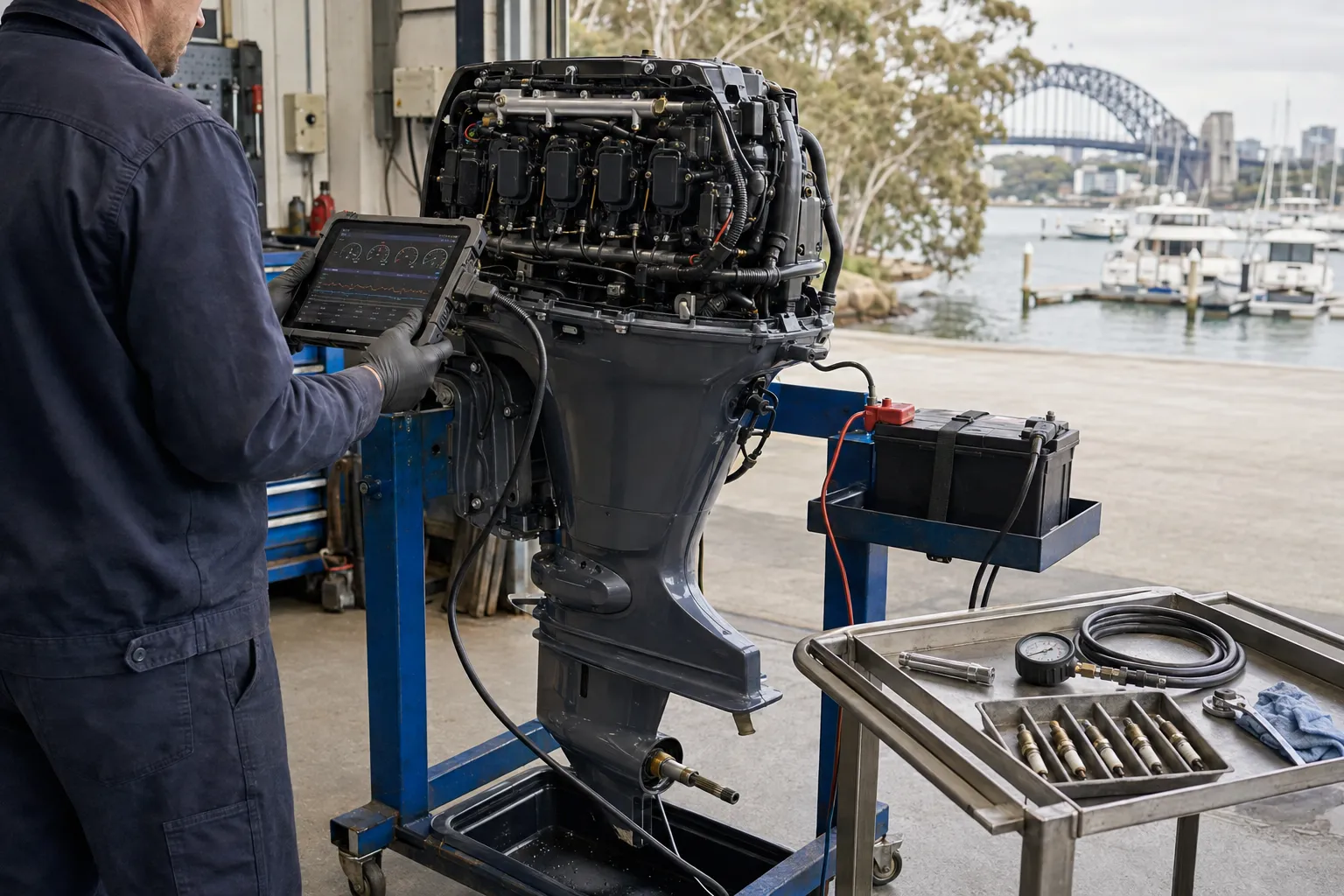
A compression test is a useful indicator of cylinder and internal engine condition, but it does not provide a complete picture of a boat engine's health. Good compression does not rule out other mechanical or electrical problems, while low compression does not identify the exact component causing the pressure loss.
A compression test cannot determine:
- Fuel or ignition faults: Clogged injectors, carburettor problems, weak ignition components or incorrect timing can cause poor running even when compression is healthy.
- Cooling or lubrication problems: A compression test will not identify restricted cooling passages, a failing water pump, low oil pressure or worn bearings.
- Gearcase or drivetrain problems: Damage to gears, clutches, couplers or other drivetrain components will not be diagnosed through cylinder compression.
- The exact cause of low compression: Worn rings, damaged pistons, leaking valves, head gasket failures and cylinder damage can produce similar results. Further testing may be required.
- Remaining engine life: Compression readings cannot reliably predict how long an engine will continue to operate. Age, operating hours, maintenance history and the condition of other components also affect reliability.
NSW Government guidance on maintaining your vessel identifies engine failure, fuel contamination, mechanical problems and battery failure as common causes of breakdown, demonstrating why compression results should be considered alongside broader system checks.
When compression readings do not explain the symptoms, a professional diagnostic check can help investigate fuel, ignition, electrical, sensor and cooling-system faults.
Compression results should therefore be considered alongside the engine's symptoms, service history and other diagnostic checks rather than used as a standalone assessment.
What Happens After an Abnormal Compression Result?
An abnormal compression reading should be treated as a starting point for further diagnosis rather than an immediate sign that the engine needs major repairs. The first step is usually to repeat the test and check for factors such as a weak battery, incorrect gauge installation, restricted airflow or inconsistent testing conditions.
If the low reading remains, further testing can help identify the source of the compression loss. A wet compression test can indicate whether worn piston rings or cylinder walls may be involved, while a leak-down test can show whether pressure is escaping through the valves, head gasket or piston rings. A technician may also inspect the spark plugs, oil and cylinder condition for additional clues.
Once the cause is identified, the repair options can be assessed. A minor fault such as a leaking valve or head gasket may require a targeted repair, while widespread wear or cylinder damage could make an engine rebuild or replacement more practical.
If testing identifies widespread internal wear, the owner may need to consider whether it is more practical to repair or repower a boat engine based on its condition, repair history and likely remaining service life.
A boat engine compression test provides valuable insight into the condition of its internal components, helping identify potential wear, damage or uneven cylinder performance. Understanding the results can make it easier to determine whether an engine needs further testing, repair, rebuilding or replacement. For boat owners, accurate compression testing is an important part of maintaining reliable performance and avoiding unnecessary repairs. Superior Marine Services can assess compression results alongside other engine symptoms and diagnostic checks, helping identify potential problems and support informed decisions about the future of an outboard, inboard or sterndrive engine.
