


Every boat owner eventually faces the question of whether an ageing engine is still worth repairing or whether it is time to invest in a replacement. For anyone looking for a trusted marine mechanic in Sydney, recognising the signs of engine wear and understanding the long-term cost of repeated repairs can make this decision easier. Superior Marine Services helps boat owners assess the condition of their engine, supporting systems and vessel before recommending the most practical course of action.
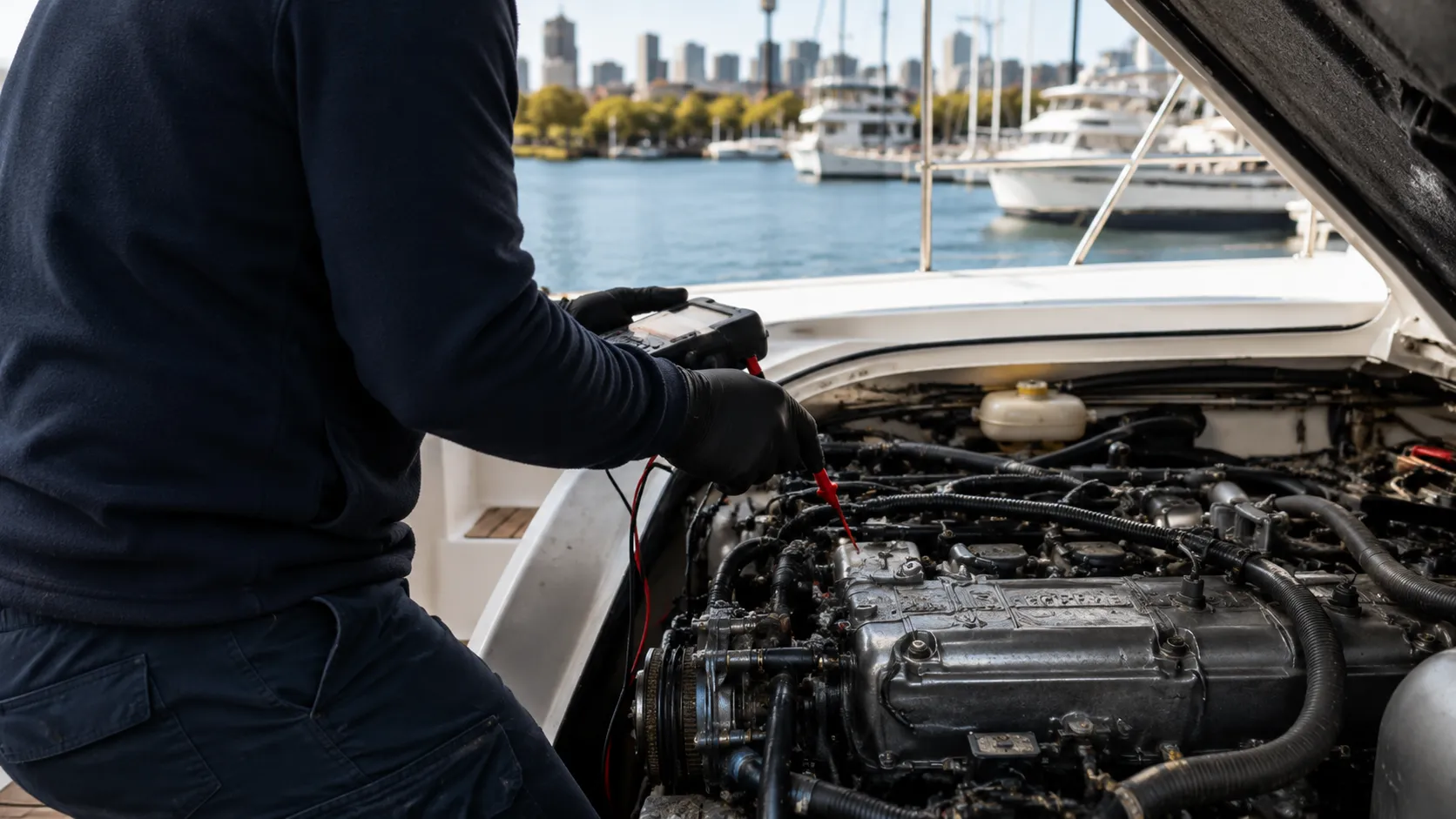
The decision to repair or repower should not be based on engine age or a single repair bill alone. Engine hours, maintenance history, reliability, parts availability, operating costs and the overall condition of the boat must all be considered. A professionally planned repower may improve dependability, performance, fuel efficiency and onboard comfort, but the replacement engine must be carefully matched to the vessel and the way it is used.
Signs Your Boat Engine Is Becoming Unreliable
An engine will often show signs of declining condition before a major failure occurs. Some faults may be caused by routine service issues or individual components, while others can indicate more extensive internal wear.
The key is to look for recurring patterns. A failed impeller, starter motor or fuel pump does not automatically mean an engine needs to be replaced. However, repeated faults across several systems, continuing performance problems and poor reliability after proper diagnosis may indicate that the engine is approaching the end of its economic service life.
Booking a professional diagnostic check can help distinguish a repairable fuel, electrical or sensor fault from more extensive internal engine wear.
Frequent Starting Problems and Stalling
Occasional starting difficulty may be caused by a low battery, contaminated fuel, faulty connection or overdue maintenance. Regular hard starting that continues after these basic issues have been addressed may point to a more significant problem.
An engine that consistently requires extended cranking, excessive choke or several attempts to start may be experiencing:
- Reduced compression
- Fuel-delivery problems
- Ignition faults
- Worn injectors or carburettor components
- Failing sensors or electronic controls
Repeated stalling at idle or when shifting into gear should also be investigated. A properly operating engine should idle consistently and transition into gear without regularly cutting out.
If the engine continues to stall after the fuel system, ignition components and controls have been inspected, further testing may be needed to identify internal wear or a more complex electronic fault.
Noticeable Loss of Power
A gradual loss of power can be another sign of declining engine condition. The boat may take longer to get on plane, struggle to maintain cruising speed or fail to reach its normal operating RPM under a familiar load.
Before assuming the engine is worn out, a marine mechanic should rule out other possible causes, including:
- A fouled hull
- An unsuitable or damaged propeller
- Excess weight onboard
- Restricted fuel delivery
- Ignition or injector faults
- Exhaust restrictions
- Incorrect throttle adjustment
If these issues have been addressed and performance continues to decline, compression loss or internal wear may be contributing to the problem.
Increasing Fuel Consumption
Rising fuel use does not always mean the engine needs replacing. Hull condition, sea conditions, loading, propeller selection and operating habits can all affect fuel consumption.
However, if the boat is using noticeably more fuel on the same trips, at similar speeds and under comparable conditions, the engine may no longer be operating efficiently. Worn internal components, poor combustion, fuel-system faults or outdated engine technology can cause the engine to burn more fuel while producing less usable power.
Accurate fuel-flow information and performance testing can help determine whether the increase is caused by engine condition or another part of the vessel’s setup.
Unusual Noise, Vibration, Smoke or Overheating
Changes in the way an engine sounds or feels should be investigated promptly.
New knocking, rattling or metallic tapping may indicate problems with bearings, valve components or other internal parts. Increased vibration can be caused by engine mounts, misfiring, shaft alignment, propeller damage or driveline wear.
Exhaust smoke can also provide useful clues:
- Persistent blue smoke may indicate oil burning or internal wear.
- Heavy black smoke can suggest excessive fuelling, restricted airflow or an overloaded engine.
- Ongoing white smoke or steam may point to cooling-system issues, water entering the combustion process or incomplete combustion.
Recurring overheating also requires proper diagnosis. A blocked intake, damaged impeller, restricted heat exchanger or faulty thermostat may be repairable. If overheating continues after the cooling system has been serviced, the engine and its installation may require a more detailed assessment.
Repeated Breakdowns and Rising Repair Costs
A series of unrelated failures can be more significant than one isolated repair. If each season brings new problems with the ignition system, cooling components, fuel system, sensors or controls, the engine may be becoming increasingly difficult to operate reliably.
The pattern matters more than the failure of any one component.
Repowering may be worth considering when:
- Breakdowns are becoming more frequent.
- Reliability remains poor after appropriate repairs.
- Several major systems are deteriorating at the same time.
- The engine regularly prevents the boat from being used as planned.
- Replacement parts are difficult to obtain.
- Repair spending is increasing without providing dependable operation.
When Repair Costs Stop Making Financial Sense
There is no single repair-cost percentage that applies to every boat or engine. The right decision depends on the engine’s condition, the likely life of the proposed repair, the cost of a suitable replacement and the owner’s future plans for the vessel.
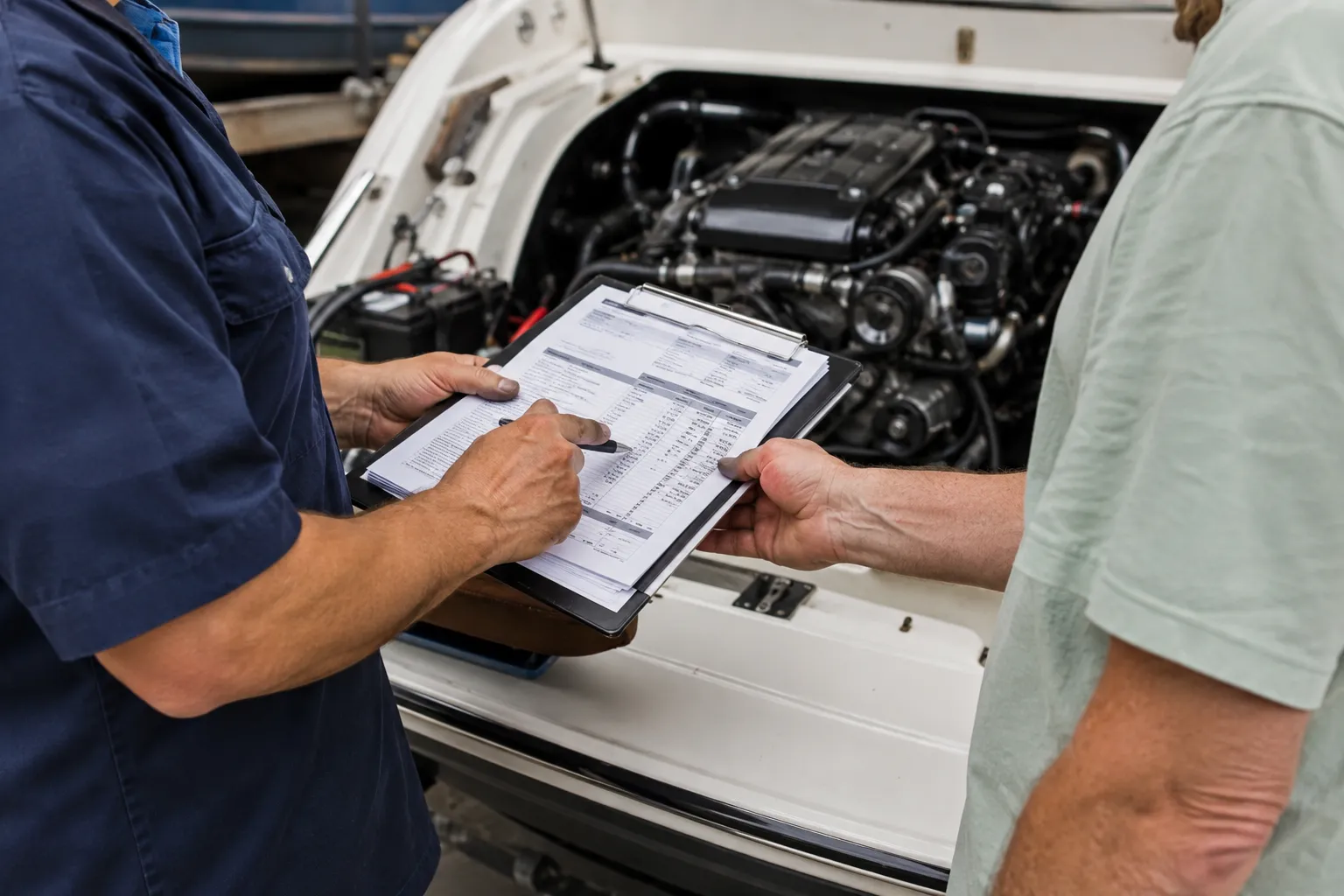
A major repair may still be worthwhile if the engine is otherwise in good condition, parts are readily available and the work is likely to provide several more years of dependable service. In other cases, the same repair cost may be difficult to justify if the engine has little market value and several other components are also nearing replacement.
Compare the Repair With the Engine’s Current Condition
A repair estimate should be considered alongside the engine’s realistic value and remaining service potential.
Important factors include:
- Engine make and model
- Age and operating hours
- Maintenance and service history
- Compression and oil-pressure results
- Corrosion and cooling-system condition
- Availability of parts and technical support
- Condition of the gearbox, drive or associated systems
- Likelihood of further repairs in the near future
If a major repair represents a substantial portion of the engine’s current value, the owner should compare the likely remaining service life with the total installed cost of a suitable replacement.
The cheapest immediate option is not always the least expensive long-term solution.
Review Cumulative Repair Spending
Several smaller repairs can add up to more than one major repair. Reviewing invoices from the previous two or three boating seasons can provide a clearer picture of how much the engine is actually costing to keep in service.
This review may include:
- Mechanical and electrical repairs
- Fuel-system work
- Cooling-system repairs beyond routine servicing
- Replacement sensors and control modules
- Towing or recovery following engine failure
- Haul-out costs linked directly to engine work
- Diagnostic labour for recurring faults
Cumulative repair costs should then be compared with the installed cost of repowering, not just the purchase price of the replacement engine. A repower budget may also need to include new controls, wiring, gauges, exhaust components, fuel-system upgrades, propeller work and installation labour.
Consider Downtime and Loss of Use
Repair invoices are only part of the calculation. An unreliable engine can also result in lost weekends, cancelled trips and extended periods when the boat cannot be used.
These indirect costs may be particularly significant for owners who rely on their boat for fishing, family trips, commercial work or time-sensitive activities.
Safety and confidence should also be considered. An engine that cannot be trusted during longer runs or changing weather conditions may no longer suit how the vessel is intended to be used.
When owners spend more time planning around possible failures than planning trips, it may be time to compare repair and repower options more closely.
How Age, Parts Availability and Downtime Affect the Decision
Engine age and operating hours provide useful context, but neither should be treated as an automatic replacement threshold.
Some older engines remain dependable because they have been correctly maintained, operated regularly and supported by readily available parts. Other engines develop major problems at comparatively low hours because of corrosion, poor servicing, extended inactivity, overheating or unsuitable operating conditions.
Engine Hours Do Not Tell the Whole Story
There is no universal number of operating hours at which every marine engine should be replaced.
Following a programme of regular vessel and engine maintenance can help prevent breakdowns and reveal developing problems with fuel lines, cooling systems, batteries, electrical connections and exhaust components.
Expected service life varies according to:
- Engine design
- Make and model
- Recreational or commercial use
- Average operating load
- Servicing frequency
- Cooling conditions
- Saltwater exposure
- Long periods of inactivity
- Previous overheating or lubrication problems
A regularly maintained engine operating within the correct load range may remain dependable for many years. An engine with lower hours may still require major work if it has experienced corrosion, poor fuel quality or repeated overheating.
Rather than relying on hours alone, a mechanic may assess compression, oil condition, cooling-system health, exhaust condition, fault history and overall performance.
Parts Availability and Manufacturer Support
An older engine may remain mechanically repairable but become impractical to maintain if parts are difficult to source.
Warning signs include:
- Long lead times for routine service components
- Frequent back orders
- Discontinued electronic modules
- Dependence on used or remanufactured parts
- Limited diagnostic support
- Few technicians familiar with the model
Parts availability is particularly important during peak boating periods. A minor fault can keep a vessel out of service for weeks if one model-specific component cannot be obtained.
A newer engine supported by an established manufacturer may provide more predictable servicing, easier diagnostics and faster access to replacement parts.
Planning Repowering Work to Reduce Downtime
Waiting for complete engine failure can limit replacement options and create unnecessary urgency. Planning the work in advance allows time to compare engines, confirm compatibility and order the required components.
For domestic commercial vessel operators, AMSA also explains that planned vessel maintenance can help reduce breakdowns, hazardous situations and operational downtime.
Many owners choose to schedule a repower during a quieter part of the year when losing access to the boat is less disruptive. Early planning also gives the workshop time to identify any related work involving:
- Fuel tanks and lines
- Electrical wiring
- Engine controls
- Cooling-water intakes
- Exhaust systems
- Engine mounts and beds
- Gearboxes or drives
- Shafts and couplings
- Propellers
- Helm displays and instrumentation
Completing these items as part of the same project can reduce delays and prevent additional modifications after the new engine has been installed.
What Must Be Checked Before Repowering
Choosing a replacement engine involves more than selecting a horsepower rating. The engine must fit the available space, suit the hull and work correctly with the boat’s driveline, fuel, electrical, cooling and exhaust systems.
A detailed pre-installation inspection helps identify modifications before the engine is ordered.
Engine-Bay Space and Service Access
The engine bay should be measured carefully, including its length, width and height. These measurements must be compared with the manufacturer’s dimensional drawings for the proposed engine.
Allowances should be made for:
- Exhaust elbows
- Filters and service points
- Cooling hoses
- Alternators and accessories
- Engine mounts
- Lifting points
- Routine maintenance access
An engine may technically fit into the compartment but still be unsuitable if technicians cannot reach filters, belts, pumps or electrical connections.
The removal and installation route also needs to be checked. Hatches, companionways and overhead structures may restrict how the old engine can be removed and the replacement lowered into position.
Mounts, Engine Beds and Structural Condition
Mount spacing and height must suit the existing stringers or engine beds. A replacement engine with different mounting points may require custom brackets or structural modifications.
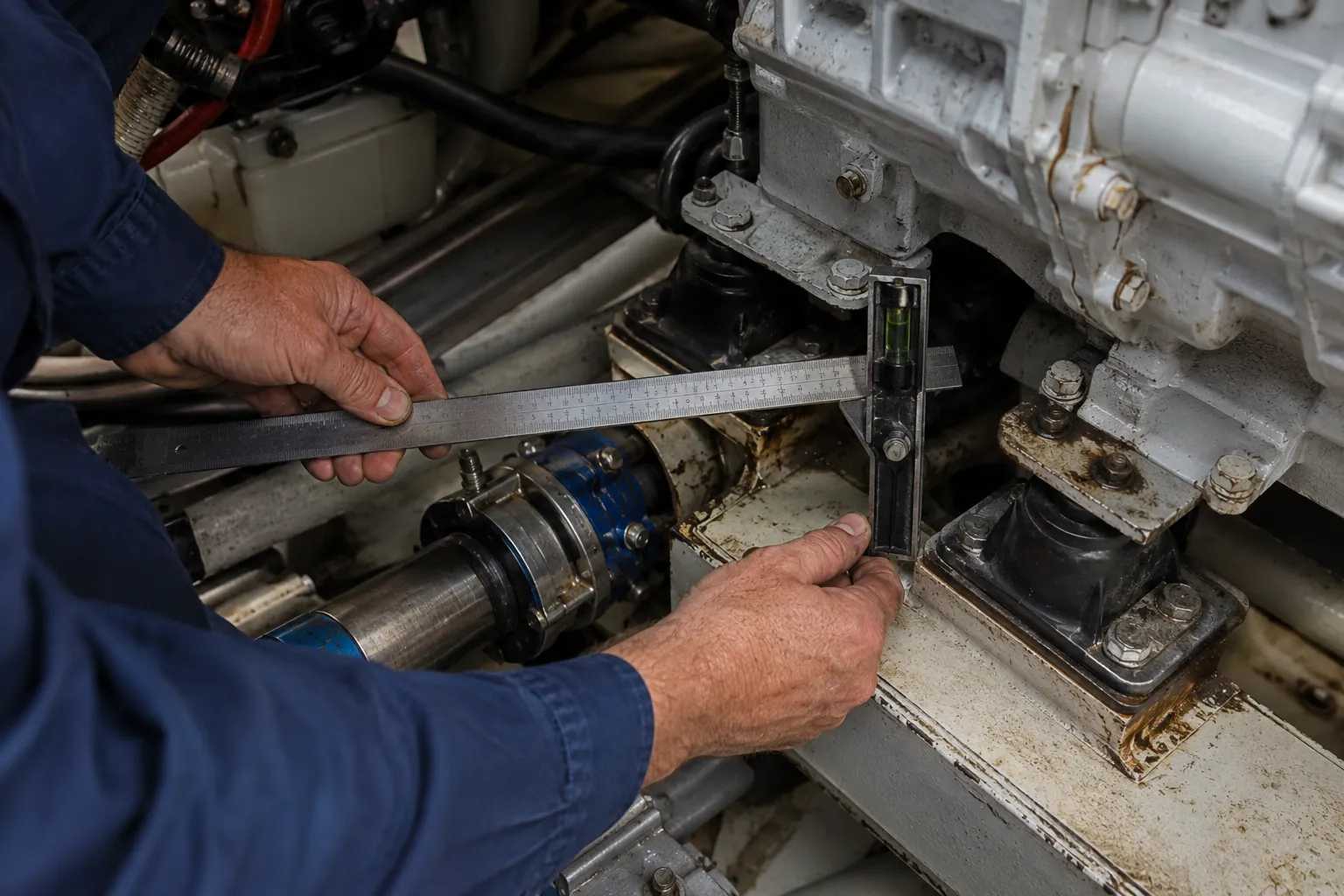
The mechanic should inspect the engine beds, stringers and surrounding hull structure for:
- Rot
- Cracking
- Corrosion
- Loose fasteners
- Previous repairs
- Movement around the mounts
Installing a new engine onto a weak or damaged structure can lead to alignment problems, vibration and further damage.
The replacement engine’s weight should also be considered. Significant weight changes may affect trim, waterline, handling and load distribution.
Shaft, Gearbox, Drive and Propeller Compatibility
The existing driveline must be capable of handling the replacement engine’s power, torque and operating range.
For shaft-driven boats, this assessment may include:
- Shaft diameter and material
- Coupling type
- Shaft alignment
- Bearing condition
- Gearbox ratio
- Propeller size and pitch
A higher-powered engine may require changes to the shaft, coupling or propeller. Even when the horsepower remains similar, a different operating RPM range or torque curve may mean the existing propeller is no longer suitable.
For sterndrive installations, the engine must be approved for the drive model. The gear ratio, spline type, transom assembly and drive condition should all be checked before installation.
Fuel-System Requirements
The fuel system must meet the requirements of the replacement engine.
For a diesel repower, checks may include:
- Tank cleanliness and condition
- Fuel-line size
- Return-line provisions
- Filtration capacity
- Water separation
- Tank ventilation
For a petrol engine, the mechanic should confirm that the fuel lines, fittings, tank ventilation and anti-siphon protection are suitable and compliant.
Older tanks and hoses may need to be cleaned, tested or replaced before connecting them to a new engine.
Electrical and Control Systems
Modern engines may require different electrical systems from those fitted to the original installation.
The assessment may cover:
- Battery capacity
- Battery condition
- Alternator output
- Starter cabling
- Circuit protection
- Earthing and bonding
- Wiring harnesses
- Electronic throttle and shift controls
- Digital gauges or multifunction displays
A change from mechanical to electronic controls may require substantial work at the helm. Space for new instruments and access for wiring should be considered during the planning stage.
Cooling and Exhaust Systems
The cooling-water intake must provide the flow required by the new engine. Seacock size, strainers, hoses and heat exchangers should be checked against manufacturer specifications.
The exhaust system also needs careful attention. Exhaust hose diameter, muffler capacity, outlet height and backpressure must remain within the engine manufacturer’s limits.
An incorrectly sized or poorly routed exhaust system can reduce performance, contribute to overheating and shorten engine life. In some installations, it may also increase the risk of water entering the engine.
How Repowering May Affect Performance and Fuel Use
Repowering is often prompted by reliability concerns, but owners may also notice changes in acceleration, cruising behaviour, noise, vibration and fuel use.
The results depend on the selected engine, its weight, gear ratio, propeller, installation quality and compatibility with the hull. A new engine does not automatically make every boat faster or more fuel efficient.
Acceleration and Cruising Performance
A correctly matched engine may help the boat get on plane more confidently and maintain speed under normal passenger and fuel loads.
If the previous engine was worn and no longer reached its rated RPM, a suitable replacement may restore some of the lost performance. However, top speed may remain similar if the replacement has the same power rating.
Changes in engine weight and torque delivery can also affect:
- Stern squat
- Planing time
- Trim response
- Steering feel
- Handling in turns
- Behaviour in choppy conditions
Comparing published horsepower figures alone is not enough. The replacement engine must be evaluated as part of the complete vessel setup.
Fuel Economy and Range
Modern engine-management systems, electronic fuel injection and improved combustion control may reduce fuel consumption in some repower projects.
Potential benefits can include:
- Lower fuel use at normal cruising speeds
- More consistent fuel delivery
- Reduced fuel use while idling or trolling
- Longer range from the existing tank capacity
- More accurate fuel-flow monitoring
Actual savings vary widely. Hull condition, boat weight, sea conditions, propeller selection and operating speed all influence fuel consumption.
Fuel-flow data from sea trials provides a more reliable basis for measuring improvement than comparing general manufacturer claims.
Selecting the Appropriate Engine Size
Repowering provides an opportunity to confirm whether the original engine size still suits the boat.
An oversized engine may increase purchase and installation costs without providing a meaningful benefit during normal use. An undersized engine may need to operate at high load for extended periods, potentially increasing fuel consumption and wear.
Engine selection should consider:
- The boat manufacturer’s approved power range
- Typical passenger and equipment loads
- Cruising and trolling requirements
- Offshore or inshore use
- Expected sea conditions
- Desired cruising speed
- Engine weight
- Fuel capacity and range
The aim is to select an engine that operates comfortably within its recommended RPM and load range during the boat’s normal use.
Why a Marine Mechanic Should Assess the Boat First
Professional marine engine services can help determine whether an engine fault is still economical to repair or whether a carefully planned repower is the more practical long-term option.
A repower is a significant investment, so the entire vessel should be assessed before an engine is ordered.
The original engine problem may have been caused or worsened by another issue, such as restricted cooling flow, an overloaded propeller, a contaminated fuel tank or an unsuitable exhaust installation. Fitting a new engine without correcting the underlying cause may lead to further problems.
Assessing the Vessel’s Overall Condition
A professional inspection can help determine whether the condition and value of the boat justify the cost of repowering.
The assessment may include:
- Hull integrity
- Signs of osmosis, impact damage or water intrusion
- Stringers and engine beds
- Engine mounts
- Steering systems
- Rudders, shafts, drives and trim systems
- Fuel tanks and lines
- Electrical wiring and battery systems
- Cooling and exhaust components
- Available engine-bay space
Structural or system repairs discovered during the inspection should be included in the overall project budget.
Confirming Whether Repair Is Still Practical
A mechanic can also determine whether the existing engine genuinely requires replacement.
Diagnostic work may show that the problem is limited to a repairable component rather than widespread engine wear. Depending on the fault, testing may include:
- Compression testing
- Oil-pressure testing
- Cooling-system inspection
- Fuel-pressure checks
- Electronic fault-code analysis
- Injector or ignition testing
- Oil analysis
- Sea-trial performance testing
This information allows the owner to compare repair and repower options using the actual condition of the engine rather than age or hours alone.
Developing a Complete Repower Plan
Once repowering has been selected, the mechanic can develop an installation plan covering the engine, gearbox or drive and all supporting systems.
This may involve:
- Selecting a compatible engine
- Confirming installation dimensions
- Reviewing weight and balance
- Planning mount or engine-bed modifications
- Checking driveline capacity
- Sizing the cooling and exhaust systems
- Updating wiring and controls
- Selecting suitable instrumentation
- Matching the propeller
- Conducting alignment checks
- Completing commissioning and sea trials
Detailed planning reduces the risk of unexpected modifications and helps ensure that the new engine operates within the manufacturer’s requirements.
Repair or Repower: Making the Final Decision
Choosing whether to repair or repower requires a balanced assessment of engine condition, reliability, repair history, parts availability and future boating plans. Engine age and operating hours can provide useful context, but they should not be used as the only reason to replace an otherwise serviceable engine.
A well-maintained engine may still be worth repairing when the fault is clearly identified, parts remain available and the rest of the engine is in good condition. Repowering may be the more practical option when breakdowns are becoming frequent, several systems are deteriorating, major parts are difficult to source or repair spending no longer provides dependable operation.
A professional inspection provides the information needed to compare both options realistically. Superior Marine Services can assess the engine, vessel and supporting systems before developing a repair or repower plan that protects the owner’s investment and keeps the boat operating safely and reliably.
