


Marine engines are working harder than ever, and modern systems depend heavily on sensors to stay reliable, efficient and safe. When an engine begins to lose power, run unevenly or trigger warning lights, it is easy to assume there is a major mechanical fault. In many cases, however, the true culprit is a faulty sensor quietly feeding inaccurate data to the engine control system. As a trusted marine mechanic in Sydney, Superior Marine Services sees this scenario frequently and understands how confusing and costly it can be when problems are misdiagnosed or left unresolved.
In this article, readers will gain clear insight into how critical sensors are to fuel delivery, cooling systems, exhaust management and overall engine performance. Superior Marine Services explains the typical symptoms of sensor failure, how these differ from deeper mechanical issues and why timely diagnosis protects both the engine and the owner’s budget. By understanding what a malfunctioning sensor can cause and how professionals approach testing and replacement, boat owners can make better decisions about when to seek expert help and how to keep their vessels running smoothly season after season.
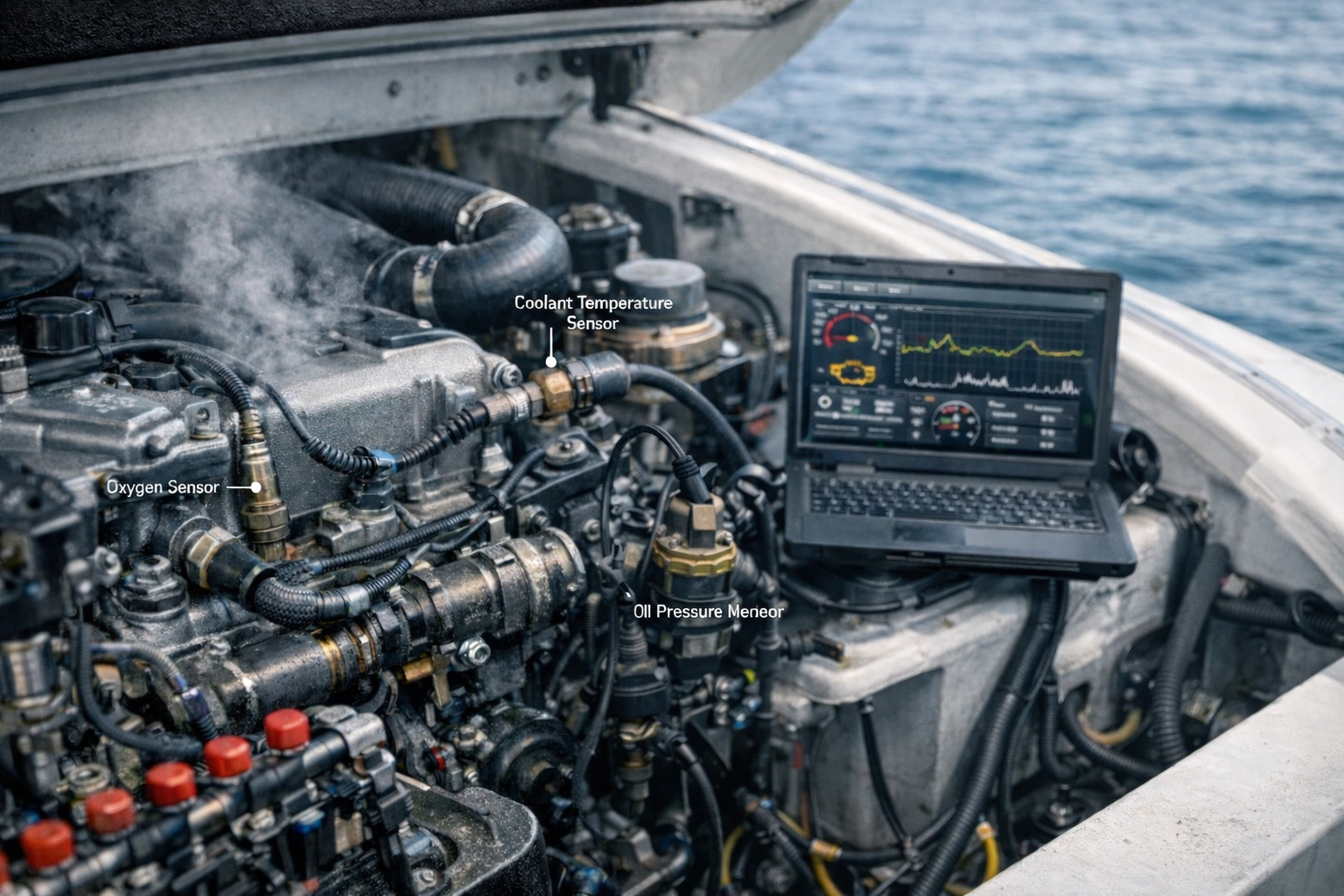
How Marine Engine Sensors Influence Performance and Engine Operation
Modern marine engines rely on a network of sensors to run efficiently, safely and with predictable power. When these sensors are working correctly, they constantly feed data to the engine control unit so it can adjust fuel, air and ignition almost instantly. When one starts to fail even slightly, the effect on performance can be significant long before a complete breakdown occurs.
For boat owners this means many “mystery” issues such as poor fuel economy, rough running or loss of power are often traced back to a sensor that is sending inaccurate information rather than a major mechanical failure. Understanding what these sensors do helps explain why a small electrical fault can feel like a big engine problem.
Fuel Delivery and Power Output
Fuel-related sensors have a direct impact on how much power the engine can produce and how efficiently it burns fuel. Key examples include:
- Oxygen or lambda sensors that measure exhaust gases so the ECU can fine-tune the fuel mixture.
- Fuel pressure sensors that confirm the system is delivering enough fuel to the injectors.
- Mass airflow or manifold pressure sensors that tell the ECU how much air is entering the engine.
If an oxygen sensor drifts out of spec, the ECU may overfuel the engine, resulting in black smoke from the exhaust, soot on plugs, higher fuel use and a strong fuel smell. A failing fuel pressure sensor can cause hard starting, hesitation when accelerating or an engine that suddenly goes into a reduced power or “limp” mode to protect itself.
On a well-running system these sensors help maintain a clean, efficient burn so the vessel gets reliable acceleration and better range per tank.
Smooth Running, Idle Quality and Starting
Other sensors are responsible for timing and stability rather than outright power. Crankshaft and camshaft position sensors tell the ECU exactly when to fire each injector and plug. Coolant temperature and intake air temperature sensors help the ECU decide how much fuel is needed for a cold start compared to a hot restart.
If a crank sensor gives an intermittent signal, the engine may crank but not start, suddenly stall at the dock or misfire under load. A faulty coolant temperature sensor can cause a rich mixture when the engine is already warm, leading to rough idle, plug fouling and fuel sheen on the water behind the boat.
When these sensors work together, the engine starts quickly, idles smoothly and transitions cleanly from idle to planing speed without stumbling.
Protection, Alarms and Limp Modes
Sensors are also the first line of defence against engine damage. Oil pressure sensors, coolant temperature sensors and exhaust temperature sensors are constantly checked by the ECU. If readings move into a dangerous range, the control system can trigger audible alarms, warning lights or an automatic power reduction.
For example, a low oil pressure signal may cause the engine to limit RPM to prevent bearing damage. An overheating signal from a coolant sensor can trigger a high-temperature alarm and force a slowdown. If a sensor itself fails completely, many marine ECUs default to a “safe” preset value, which can also reduce power or change the way the engine responds.
Addressing a faulty sensor or damaged wiring connection often restores normal operation and prevents more serious engine damage if warning signs are not ignored.
Warning Signs a Faulty Sensor May Be Causing Marine Engine Problems
When a marine engine starts acting up, many boat owners assume they have a fuel or mechanical issue. In reality a failing sensor is often the hidden cause. Because modern marine engines rely heavily on electronic inputs, even a single inaccurate sensor can trigger poor performance, hard starting or warning lights that seem to come and go.
Recognising the warning signs of a faulty sensor early can prevent unnecessary parts replacement and reduce the risk of being stranded on the water. Superior Marine Services recommends paying close attention to how and when symptoms appear, especially if the engine is otherwise well maintained.
Intermittent Check Engine or Alarm Warnings
One of the most common clues is a warning light or alarm that appears randomly then disappears with no obvious pattern. This is typical of a sensor that is sending occasional out-of-range readings rather than a consistent mechanical fault.
Owners may see:
- A check engine or fault light that appears briefly at specific RPMs and then clears.
- Audible alarms on startup that reset when the engine is cycled.
- Fault codes that change between scans or cannot be reproduced on demand.
If the engine runs normally most of the time but repeatedly logs electronic fault codes, this often points to an issue with an oxygen sensor, coolant temperature sensor, oil pressure sender or throttle position sensor rather than the components they monitor.
Sudden Changes in Performance or Fuel Consumption
A failing sensor can confuse the engine control unit, which then delivers the wrong fuel or timing. The result is sudden or inconsistent performance changes that are not explained by heavy sea conditions or recent maintenance.
Warning signs include:
- Noticeable loss of power, particularly under load or when trying to get on plane.
- Surging or hesitation at steady throttle as if someone is briefly backing off the throttle then reapplying it.
- Hard starting, rough idle or stalling just off idle, especially once the engine is warm.
- A sharp increase in fuel use compared with normal trips and conditions.
For example, a faulty temperature sensor can trick the engine into thinking it is cold all the time, causing a rich mixture that wastes fuel and fouls plugs even though the cooling system is working correctly.
Readings That Do Not Match Reality
Another strong clue is when gauges or data displays show values that do not make sense based on what is actually happening on the boat. Since many displays are driven by sensor input, a single bad sensor can make everything look wrong.
Common red flags are:
- Temperature reading very low or very high while the engine feels and sounds normal
- Oil pressure gauge fluctuating rapidly with no noise or leak and stable oil level
- Fuel level or fuel rate data changing abruptly with no real change in use
- RPM spikes or dropouts on electronic tachometers while the engine note stays steady
When physical checks such as feeling hose temperatures, confirming oil level or visually checking fuel use conflict with electronic readings, licensed marine mechanics often find the underlying issue is a sensor fault or a poor connection at the sensor plug rather than a serious mechanical failure.
Diagnosing Sensor Failures and Preventing Further Engine Damage
When a marine engine starts to run poorly, many owners immediately think of fuel or mechanical issues. In reality a faulty sensor is often to blame, and if it is ignored, it can quickly lead to serious engine damage. Professional marine mechanics focus on identifying whether the problem is electronic or mechanical so repairs are accurate and further wear is avoided.
Correct diagnosis starts with reading what the engine management system is seeing, then confirming those readings with real‑world tests. Our technicians do not just replace sensors on guesswork because a wrong call can mask the real fault and keep the engine at risk.
Using Diagnostic Tools the Right Way
Modern outboards and inboard engines store fault codes when a sensor reading is out of range. Our team connects manufacturer‑specific diagnostic software to the engine ECU to pull these codes and live data. This instantly shows whether the ECU believes a sensor is open, shorted or providing unrealistic values.
For example, if the coolant temperature sensor reads cold while the engine block is clearly hot, that is a strong sign the sensor or wiring is at fault. We cross‑check with an infrared temperature gun to compare actual temperature with what the ECU reports. The same method applies to oil pressure, where a mechanical gauge is used to confirm whether low pressure is real or just a bad sender.
Voltage checks are critical. Using a multimeter, our technicians verify reference voltage to the sensor, typically 5 volts on many systems, signal return and ground quality. High resistance in corroded marine connectors is a common cause of intermittent sensor faults, especially in saltwater environments.
Differentiating Sensor Faults from Mechanical Problems
Not every fault code means the sensor is bad. Sometimes the sensor is accurately reporting a genuine engine problem. A licensed marine mechanic always validates the mechanical side before fitting new parts. If an oxygen or exhaust sensor shows a lean condition, we inspect the fuel system for restricted filters, air leaks or low fuel pressure. When a knock sensor reports detonation, we check ignition timing, fuel quality and cooling performance. A throttle position sensor code might be triggered by worn linkage or a sticking throttle body rather than the sensor itself.
This approach prevents unnecessary sensor replacement and ensures the true cause is corrected so the engine does not suffer repeated faults that can shorten its life.
Steps to Protect the Engine While a Sensor Issue Exists
When a sensor is suspected or confirmed faulty, the priority is to keep the engine safe until repairs are complete. Superior Marine Services typically recommends:
- Avoiding high‑rpm operation or heavy throttle
- Monitoring analogue gauges for temperature, oil pressure and charging
- Respecting any limp‑home mode the ECU applies rather than trying to override it
If a coolant temperature or oil pressure sensor is unreliable, the engine should be shut down and inspected because a real overheat or pressure loss can destroy bearings, pistons or cylinder heads in minutes.
Regular professional servicing, cleaning electrical connectors using dielectric grease and replacing damaged looms all help prevent sensor issues. By dealing with early warning signs quickly, boat owners reduce the risk of costly engine rebuilds and unexpected breakdowns on the water.
In the end, many stubborn “mystery” performance issues, starting problems, fuel inefficiencies and warning alarms on today’s marine engines can be traced back to one simple source: a faulty sensor. Throughout this article, we’ve looked at how modern engines rely on an entire network of sensors to manage fuel delivery, cooling, lubrication, exhaust and electrical systems and how just one failing component can throw the whole system out of balance. We’ve also walked through the most common warning signs of sensor trouble, the risks of ignoring them and the way proper diagnostics separates a bad sensor from deeper mechanical problems. The key takeaway is that guessing and parts-swapping usually waste time and money; systematic testing, the right diagnostic tools and brand-specific expertise are what protect your engine, your schedule and your budget.
At Superior Marine Services, our goal is to get to the root cause quickly, whether that turns out to be a $50 sensor or a larger underlying issue, so your boat runs the way it was designed to: reliably, efficiently and safely every time you turn the key.
