


Knowing how often a boat engine should be serviced is essential for maintaining reliability, performance and long-term engine life. Regular servicing helps identify wear, corrosion and developing faults before they lead to costly breakdowns. A marine mechanic in Sydney can also help determine the right service schedule based on the engine type, usage and condition.
Superior Marine Services provides professional boat engine servicing and maintenance to help keep marine engines operating reliably. Service requirements can depend on operating hours, saltwater exposure, storage conditions, fuel quality and the manufacturer's recommendations.
The service schedule can involve annual or engine-hour intervals, with additional inspections required when operating conditions or engine symptoms indicate a need for earlier attention. The sections below cover typical service intervals, what can affect them, what servicing involves and how boat owners can care for an engine between professional services.
How Often Should a Boat Engine Be Serviced?
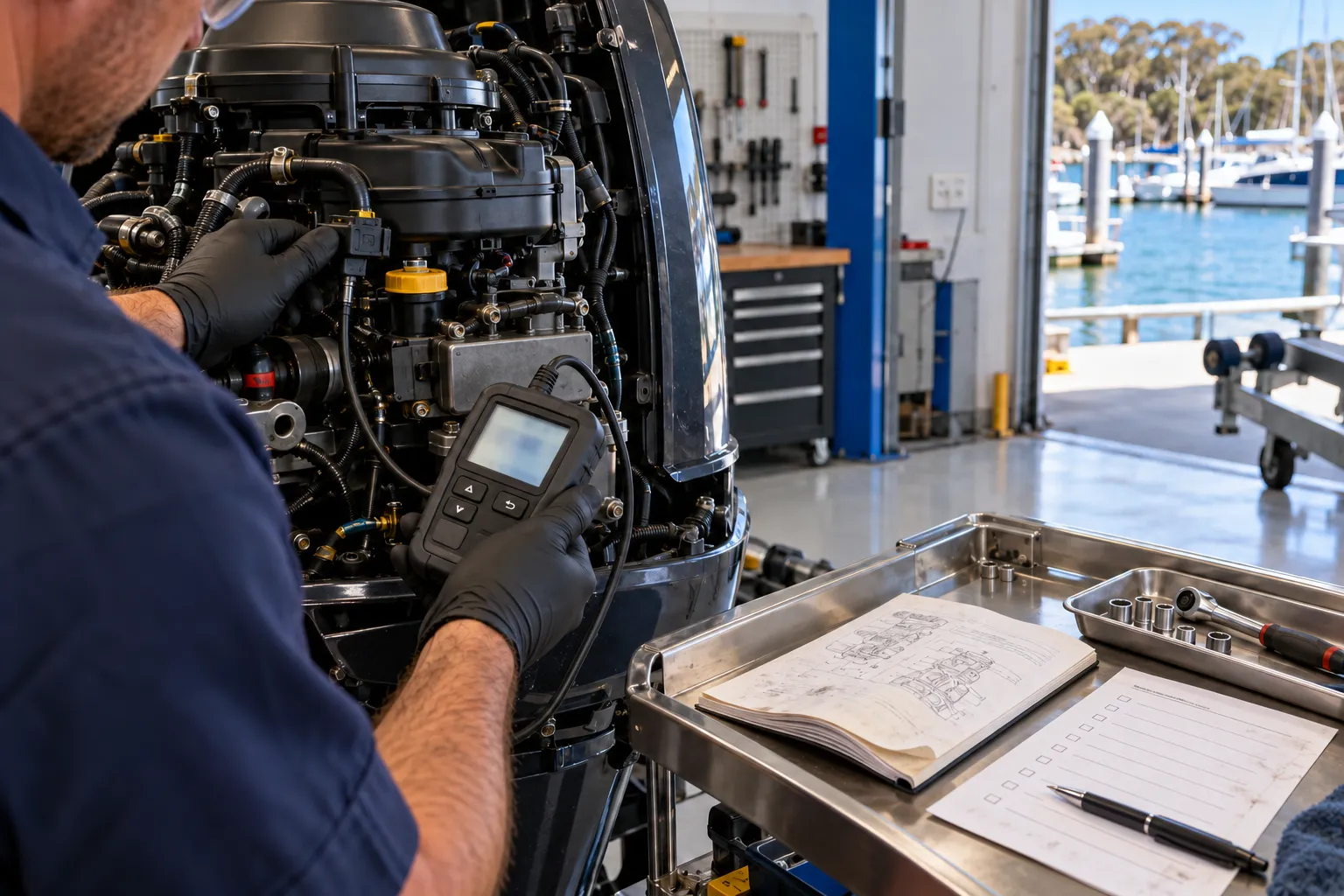
Most boat engines should be serviced at least once a year or at the engine-hour interval specified by the manufacturer, whichever comes first. Many recreational engines have service intervals around every 100 hours, while some require an earlier check at around 50 hours. The correct interval depends on the engine type, model, operating conditions and how frequently the boat is used, so the manufacturer's service schedule should always take priority.
A yearly service remains important for boats that accumulate few engine hours because fluids, fuel systems, cooling components, seals and other parts can deteriorate with time. Boats that spend long periods in storage should also be inspected before returning to regular use. A marine mechanic can assess the engine's condition and determine whether additional maintenance is required.
As a general guide:
- Every 50 hours: An interim inspection may be required for some engines.
- Every 100 hours: A more comprehensive service may be due for many recreational engines.
- Every 12 months: An annual service may be required even with low engine hours.
- After extended storage: Key systems should be checked before the boat returns to regular use.
The manufacturer's recommendations should take priority if they specify different intervals or additional maintenance requirements.
What Factors Can Change Your Boat Engine Service Interval?
The recommended service interval is a useful starting point, but the actual timing can change depending on the engine, operating conditions and maintenance history. Boats used heavily or in demanding environments may require servicing more frequently than those used occasionally in mild conditions.
Engine Type, Hours and Usage
Different engines have different maintenance requirements, so service intervals should always follow the manufacturer's recommendations. Engine hours are also important because a boat used frequently can reach its service interval much sooner than one used only occasionally. Older or high-hour engines may also require closer monitoring as components such as seals, cooling systems and fuel systems become more susceptible to wear.
Frequent high-load operation, towing, prolonged running at high throttle and repeated short trips can also place additional demands on an engine. These conditions may justify earlier inspections or maintenance.
Environment and Storage
Saltwater exposure increases the risk of corrosion, while muddy, silty or debris-filled water can affect cooling systems, water pumps and strainers. Boats kept in the water continuously may require more frequent inspections than trailer boats that are flushed and checked after use.
Long periods of storage, poor fuel quality and an uncertain maintenance history are other reasons to inspect an engine before relying on a standard service interval. Fuel systems, batteries, hoses, seals and cooling components can deteriorate while a boat is unused.
Avoiding common winter storage mistakes can help protect the fuel, cooling and electrical systems while the boat is unused.
How Often Should Different Types of Boat Engines Be Serviced?
Service requirements vary between outboard, inboard, sterndrive and diesel engines. Engine design, operating hours, workload and the manufacturer's recommendations all affect the appropriate schedule. An annual service can be a useful baseline for many recreational boats, but the service interval specified for the particular engine should always take priority.
Outboard Engines
Outboard engines are commonly serviced according to a combination of operating hours and calendar time. Many recreational models have a more comprehensive service around the 100-hour mark, while some manufacturers specify earlier initial checks or shorter intervals.
Even when an outboard accumulates relatively few hours, annual servicing can help identify issues involving spark plugs, fuel systems, cooling components, corrosion and gearbox oil.
Inboard Petrol Engines
Inboard petrol engines require regular oil and filter changes, cooling-system inspections, ignition checks and fuel-system maintenance. The manufacturer's schedule may specify operating hours and calendar intervals.
Because these engines are enclosed within the boat, checking for fuel, oil, exhaust and cooling-system leaks is important. Heavy use or continuous storage in the water may also increase maintenance requirements.
Inboard Diesel Engines
Diesel inboards can accumulate substantial operating hours in larger vessels and boats used for extended cruising. Their maintenance schedules vary between models and may include engine oil, oil and fuel filters, cooling systems, belts and hoses.
Commercial, charter and frequently used vessels can reach hour-based service intervals more quickly than boats used occasionally, making accurate engine-hour records important.
Sterndrive Engines
Sterndrive systems require maintenance of the engine and drive unit. Depending on the manufacturer's schedule, servicing may include drive oil, propeller and seal inspections, cooling-system checks and examination of anodes and other corrosion-prone components.
Because the drive is exposed to the marine environment, saltwater use and corrosion can affect maintenance requirements, when the boat remains in the water for extended periods.
Two-Stroke and Four-Stroke Engines
Two-stroke and four-stroke outboards have different maintenance requirements because of their engine designs. Older two-stroke engines may require attention to fuel systems, spark plugs and lubrication, while modern four-stroke engines have maintenance schedules similar to other four-stroke petrol engines.
Neither type should be serviced according to a universal interval. The manufacturer's recommended operating hours, calendar periods and component replacement schedule should be followed for the specific engine.
Regardless of engine type, servicing may need to be brought forward when a boat is used heavily, operated in harsh conditions or develops symptoms like hard starting, overheating, unusual noises, loss of power or warning alarms.
Why Is Regular Boat Engine Servicing Important?
Regular boat engine servicing helps prevent avoidable breakdowns, reduce component wear and maintain reliable performance. Marine engines are exposed to saltwater, moisture, varying loads and periods of inactivity, which can contribute to corrosion, contamination and mechanical wear. Routine servicing allows developing problems to be identified and addressed before they result in more extensive repairs.
Regular servicing can help to:
- Prevent breakdowns: Inspections can identify worn belts, blocked filters, cooling-system problems, leaks and other issues before they cause engine failure.
- Protect engine components: Changing fluids and filters and maintaining cooling and lubrication systems helps reduce unnecessary wear on internal components.
- Maintain performance: A properly maintained fuel, ignition and cooling system can support consistent starting, running and power delivery.
- Support safety: Identifying fuel leaks, overheating, electrical faults and other mechanical problems before heading out can help reduce potential risks on the water.
Following the manufacturer's service schedule is important, but servicing may need to occur sooner when an engine is used heavily, operated in harsh conditions or develops warning signs.
What Is Usually Included in a Boat Engine Service?
A boat engine service usually includes fluid and filter changes, inspections of the fuel and ignition systems, cooling-system checks, electrical testing and a general assessment of the engine's condition. The exact work depends on the engine type, manufacturer requirements, operating hours and service history.
Fluids and Filters
Engine oil and filters are commonly replaced at scheduled service intervals to help protect internal components and maintain proper lubrication. Depending on the engine, servicing may also include changing the gearcase or drive oil and replacing fuel or water-separating filters.
Fuel and Ignition Systems
Petrol engines may have spark plugs, ignition components, fuel lines and connections inspected for wear, corrosion or leaks. The air intake and fuel system can also be checked for blockages or other issues that could affect starting, power or fuel consumption.
Boat owners should also follow safe refuelling procedures and investigate fuel smells, leaks or vapour accumulation before starting the engine.
Cooling and Electrical Systems
Cooling-system checks can include the water pump, impeller, hoses, strainers and thermostat, depending on the engine and manufacturer's service schedule. The battery, terminals, charging system and other visible electrical connections may also be inspected for corrosion, damage or poor connections.
Engine Checks
A service will include an inspection for oil, fuel or coolant leaks, corrosion, worn components and other signs of mechanical problems. Control systems, engine mounts and anodes may also be checked where applicable. Diagnostic testing or a sea trial may be included when required to confirm that the engine is operating correctly.
The exact checklist should follow the manufacturer's recommendations rather than assuming every engine requires the same service.
What Is the Difference Between Routine and Major Boat Engine Servicing?
Routine boat engine servicing covers regular maintenance performed at the manufacturer's recommended hour or calendar intervals. Major servicing is more extensive and is scheduled at specific engine-hour milestones or when inspections identify components that need additional attention.
Routine Servicing
Routine servicing helps keep the engine and its key systems operating correctly between major service intervals. Depending on the engine, it may include:
- Engine oil and filter changes
- Fuel filter and spark plug checks or replacement
- Cooling-system inspections
- Belt and hose checks
- Battery and charging-system checks
- Inspections for leaks and corrosion
The exact checklist varies by engine type and manufacturer. Regular servicing also helps identify worn components before they develop into more problems.
Major Servicing
Major servicing involves more detailed inspections and additional component replacement than routine maintenance. It may include checking less accessible components, replacing scheduled wear items, carrying out diagnostic testing and inspecting parts that are not examined during every routine service.
The timing depends on the manufacturer's service schedule, engine hours, age and condition. If an inspection identifies significant wear or a mechanical fault, additional repair work may also be required.
What Are the Signs Your Boat Engine Needs Servicing Early?
A boat engine may need servicing before its scheduled interval if there is a noticeable change in starting, running, sound, temperature or performance. Recognising these engine warning signs can help boat owners arrange an inspection before a minor fault develops into a breakdown.
Here are some signs that an engine needs attention:
- Difficulty starting or rough running: Longer cranking, hard starting, rough idling, stalling or hesitation can indicate problems with the battery, fuel system, spark plugs, injectors or ignition components.
- Unusual noises or vibrations: New knocking, rattling, ticking or excessive vibration may indicate worn, damaged or loose components. Changes in vibration can also be linked to the propeller, shaft, engine mounts or drivetrain.
- Unusual smells or visible leaks: Fuel, oil, coolant or burning smells can indicate leaks, overheating, damaged hoses or electrical problems and should be investigated promptly.
- Loss of power or increased fuel consumption: Difficulty reaching normal speed, sluggish acceleration or a sudden increase in fuel use can indicate problems with the fuel, air, cooling or propulsion systems.
- Overheating or warning alarms: Rising temperature readings, steam, overheat alarms, warning lights or recurring fault codes require prompt attention. Continuing to operate an overheating engine can cause further damage.
If any of these symptoms appear, the engine should be inspected rather than waiting for the next scheduled service.
How Long Does a Boat Engine Service Usually Take?
A routine boat engine service usually takes a few hours, although the exact timeframe depends on the engine type, accessibility, service requirements and overall condition. A straightforward outboard service may be completed more quickly than servicing a larger inboard, diesel or sterndrive engine.
A major service can take several hours to a full day or longer if additional components need to be inspected, replaced or tested. Corrosion, difficult access, existing mechanical faults and delays in sourcing replacement parts can also extend the service time.
Booking the service in advance can allow enough time for any additional repairs before the boat is needed.
Can Boat Owners Perform Basic Engine Maintenance Themselves?
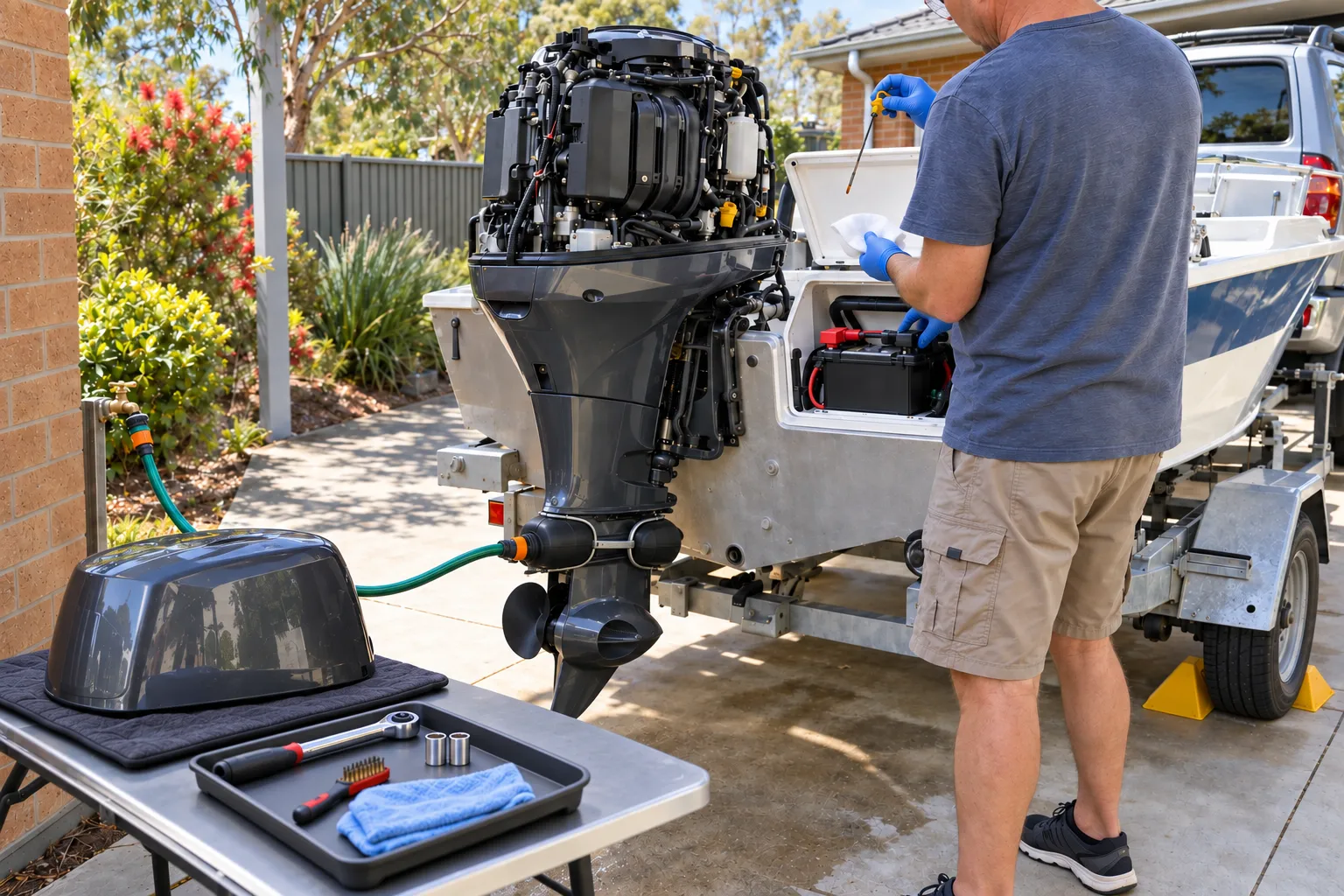
Yes, boat owners can perform some basic engine maintenance between professional services, provided the tasks are recommended by the manufacturer and are within their level of experience. Simple checks can help identify problems early and keep the engine in good condition between scheduled services.
Boat owners can also follow official vessel maintenance guidance when checking the engine, battery, fuel system and other essential components.
Owner maintenance tasks could be:
- Checking engine oil: Check the oil level regularly and top up with the correct specification when required.
- Inspecting for leaks: Look for signs of fuel, oil or coolant leaks around the engine, hoses and connections.
- Checking cooling-water flow: For applicable engines, confirm that the cooling-water tell-tale is flowing normally.
- Inspecting belts and hoses: Check for visible cracks, fraying, swelling, damage or loose connections.
- Checking battery connections: Inspect terminals and visible electrical connections for corrosion or looseness.
- Flushing after saltwater use: Flush the engine with fresh water when recommended by the manufacturer.
- Checking corrosion protection: Inspect outboards and sterndrives for corrosion and monitor sacrificial anodes.
More complex work, including fuel-system repairs, electrical diagnosis, cooling-system repairs and internal engine repairs, should be left to a qualified marine mechanic. Basic maintenance should complement rather than replace scheduled servicing.
How Can Boat Owners Keep an Engine Running Between Services?
Boat owners can help keep an engine running reliably between professional services by following the manufacturer's maintenance recommendations, monitoring engine performance and addressing warning signs early. This is important for boats exposed to saltwater, stored in the water or left unused for extended periods.
Flush and Inspect
Where recommended by the manufacturer, flush the engine with fresh water after saltwater use to help remove salt and debris from the cooling system. Check for visible oil, fuel or coolant leaks, damaged hoses, loose connections and signs of corrosion.
Check Fluids and Cooling
Check engine oil, coolant and other fluids at the intervals specified by the manufacturer. Monitor cooling-water flow and operating temperature during use, as weak water flow, overheating or warning alarms can indicate a problem that requires attention.
Maintain Fuel and Battery Systems
Use and store fuel according to the manufacturer's recommendations and follow the required fuel-system maintenance for the engine. Battery terminals and connections should also be kept clean, secure and free from corrosion, particularly when the boat is stored for long periods.
Track Hours and Changes
Keeping records of engine hours, servicing and repairs makes it easier to plan upcoming maintenance. Changes in starting, engine noise, vibration, exhaust, fuel consumption or operating temperature should also be investigated rather than ignored.
These habits can help maintain the engine between services, but they should not replace scheduled professional maintenance.
Keeping a boat engine reliable requires more than following a single service interval. Manufacturer recommendations, engine hours, operating conditions and how frequently the vessel is used all help determine when maintenance is needed. Regular inspections and prompt attention to changes in performance can also help prevent minor issues from becoming costly breakdowns.
Superior Marine Services can help boat owners maintain a consistent servicing routine suited to their engine and operating conditions. Regular professional servicing, combined with basic maintenance between services, can support reliable performance, fuel efficiency and longer engine life.
